In terms of data output and precision performance, the differences between the two are particularly obvious. Absolute encoders output absolute position data, which can directly communicate with the controller without subsequent calculation. The precision is mainly determined by the number of encoding bits, commonly 10-bit, 12-bit, 16-bit, etc. The higher the number of bits, the higher the position resolution, enabling high-precision position positioning. Incremental encoders output pulse signals, and the controller needs to convert the displacement by counting the number of pulses. The precision is affected by pulse frequency and counting methods. Although the precision can be improved by increasing the pulse frequency, the overall positioning precision is lower than that of absolute encoders of the same specification, and it is prone to counting errors due to interference.
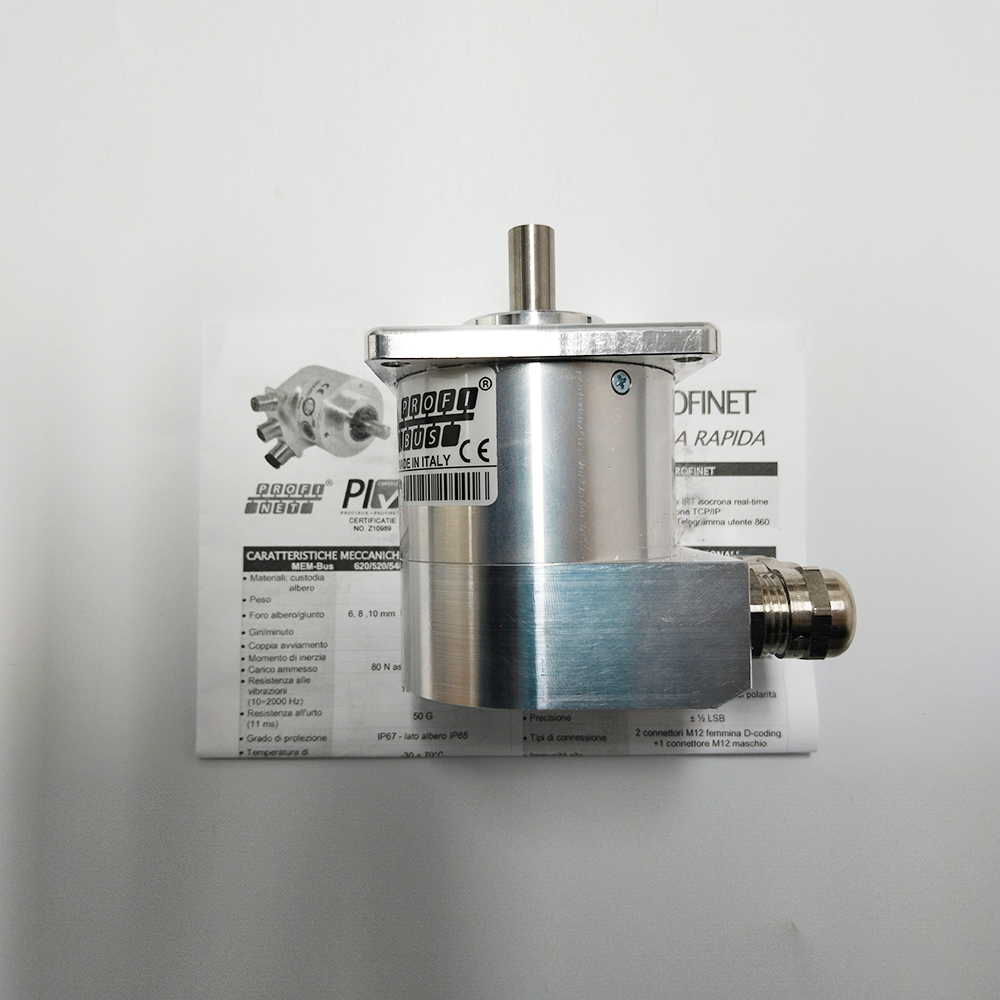
The differences in functional characteristics and application scenarios determine the application boundaries of the two. Absolute encoders have the advantages of power-off memory and no need for calibration, as well as strong anti-interference ability, making them suitable for scenarios that require high precision in position positioning, frequent start-stop, and no loss of position information, such as robot joint control, CNC machine tools, precision instruments, and elevator positioning. Incremental encoders are simple in structure, low in cost, and fast in response speed, which are suitable for scenarios that do not require high position precision and only need to detect speed or relative displacement, such as motor speed detection, conveyor belt speed control, and feed control of ordinary machine tools.
In addition, there are differences between the two in installation, maintenance and cost. Absolute encoders have complex structures and high precision requirements for components, so their cost is much higher than that of incremental encoders. During installation, attention should be paid to the coaxiality with the measured components, and the maintenance difficulty is slightly greater; incremental encoders have simple structures, small sizes, convenient installation and low maintenance costs, making them the most widely used type of encoder in the industrial field.
In summary, absolute encoders take "absolute position, high precision, and power-off memory" as their core advantages, adapting to high-end precision control scenarios; incremental encoders are characterized by "low cost, high response, and simple structure", meeting the needs of conventional speed and relative displacement detection. In practical applications, it is necessary to reasonably select the appropriate type of encoder according to the precision requirements, working environment, and cost budget of the equipment to achieve efficient and stable operation of the equipment.